
Selenium alternatives in 2026: migrate, modernize, or go AI
By qtrl Team · Engineering
Selenium still runs tests at more than 55,000 companies and holds roughly 26% of the test automation market. For a framework that turns 22 this year, that isn't quiet decline. It's dominance by inertia and real utility.
The question most teams on Selenium are asking in 2026 isn't whether the framework is dead. It clearly isn't. The question is harder: does it still make sense for us, or are we paying a tax on every release because nobody wants to touch the migration?
There are three honest answers, and the right one depends on how much of your team's time gets burned fighting the framework instead of shipping tests.
Is Selenium dead in 2026?
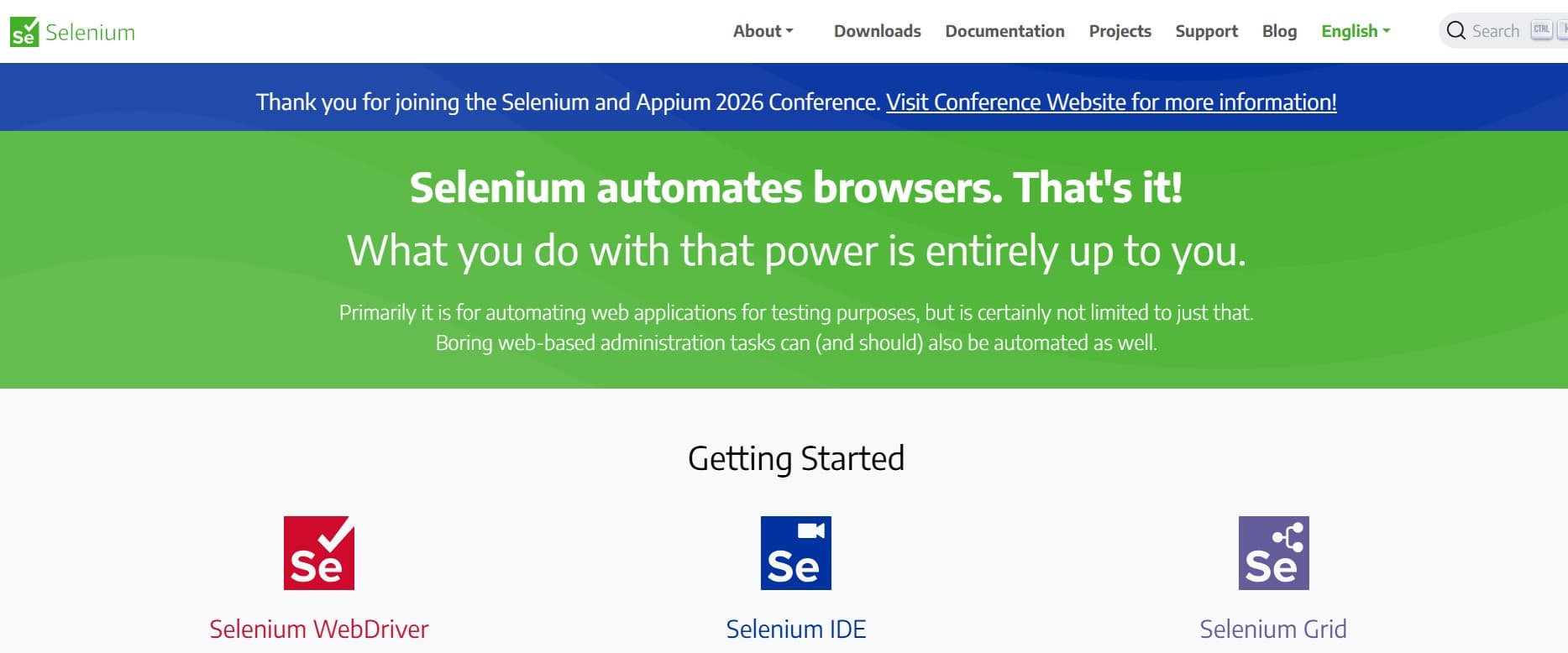
No. Not even close. Selenium started in 2004 and Selenium WebDriver became a W3C standard in 2018. It runs in essentially every language a backend engineer might reasonably use, and it runs on essentially every browser and OS combination a QA lead might reasonably care about. That breadth is why it still wins in large organizations with heterogeneous stacks.
The more recent Selenium 4 releases closed some long-standing gaps. WebDriver BiDi support gives you bidirectional communication with the browser, so you can listen for network events, console logs, and JS exceptions without a separate driver layer. Relative locators let you target elements by position ("above this label, to the right of that button") instead of wrestling with brittle XPath. The new grid architecture is easier to stand up and scale than the old Hub-and-Node setup. These aren't marketing wins. They're the kind of changes that make day-to-day work less painful.
And the ecosystem around Selenium is still the biggest in the industry. Appium for mobile. Selenide and WebDriverIO for nicer APIs on top. Every CI system, every reporting tool, every commercial testing platform has first-class support. Two decades of tooling is hard to match.
Where Selenium still hurts in 2026
None of that makes Selenium effortless. The teams we talk to who run large Selenium suites describe the same pain points over and over.
Auto-waiting isn't native. You can add explicit waits, and disciplined teams do. But the default behavior is still "click this thing immediately," which means a slow network, a delayed animation, or a re-render that shifts the DOM can turn a stable test flaky. Playwright solved this by making auto-waiting the default. Selenium didn't.
Locator strategy is on you. CSS, XPath, relative locators, data attributes, roles. The framework gives you the tools. It doesn't give you opinions. That flexibility is powerful in experienced hands and expensive in inexperienced ones. Most Selenium suites that go flaky go flaky at the locator layer first.
Driver and browser version drift keeps biting teams. Selenium Manager (added in 4.6) handles a lot of this automatically now, which is a real improvement. But if your CI still pins ChromeDriver manually or runs against an old Hub setup, expect to lose an afternoon every few weeks to "why did all the Chrome tests start failing."
Parallelism at real scale means infrastructure work. The Selenium Grid is a legitimate piece of software. It's also a piece of software your team has to run, patch, monitor, and scale. That's a hidden cost that only shows up when someone leaves and the grid mysteriously starts OOMing.
Selenium vs Playwright vs AI-based testing: a comparison
The main Selenium alternatives in 2026 fall into two camps: modern scripted frameworks (Playwright is the obvious one, Cypress is still meaningful for frontend-heavy teams) and AI-based testing platforms that execute tests from natural-language intent. Here's how the three stack up on the things teams actually compare.
| Capability | Selenium 4 | Playwright | AI-based testing |
|---|---|---|---|
| Auto-waiting | Explicit/implicit waits | Built-in | Built-in |
| Languages | JS, TS, Python, Java, C#, Ruby | JS, TS, Python, Java, C# | Plain language or code |
| Parallel execution | Selenium Grid (self-managed) | Built-in, free | Managed by the platform |
| Self-healing selectors | No | No | Yes |
| Test authoring | Code | Code | Natural language |
| Browser support | Chromium, Firefox, Safari, Edge, IE | Chromium, Firefox, WebKit | Real browsers (platform-managed) |
| Ecosystem maturity | ~20 years | ~5 years | ~2 years |
| Best fit | Broad language matrix, legacy suites | Modern web apps, new projects | Fast-changing UIs, small QA teams |
No row of that table picks a winner on its own. The right answer depends on which row matches the problem your team is actually stuck on, which is what the next section is for.
Should you migrate from Selenium, modernize, or replace it?
If you're on Selenium in 2026 and wondering what to do, there are three paths that actually make sense. None of them is universally right.
Path 1: Modernize your Selenium suite
If you have a mature Selenium suite, an experienced team, and you're hitting specific pain points rather than structural ones, migration is almost always the wrong call. Rewriting a mature Selenium suite in Playwright isn't a weekend project. It's a serious investment, and you inherit a different set of problems on the other side.
Modernization usually means upgrading to the latest Selenium 4.x, turning on Selenium Manager so drivers stop being a headache, adopting relative locators where you've been fighting XPath, and investing in a real Page Object or component model if you don't already have one. BiDi is worth the learning curve. If you're still on Selenium 3, the upgrade path alone will meaningfully cut your maintenance burden.
This is the right path if your team is productive, your suite catches real regressions, and the bottleneck is things like flaky locators or slow grid scaling rather than the framework itself.
Path 2: Migrate from Selenium to Playwright
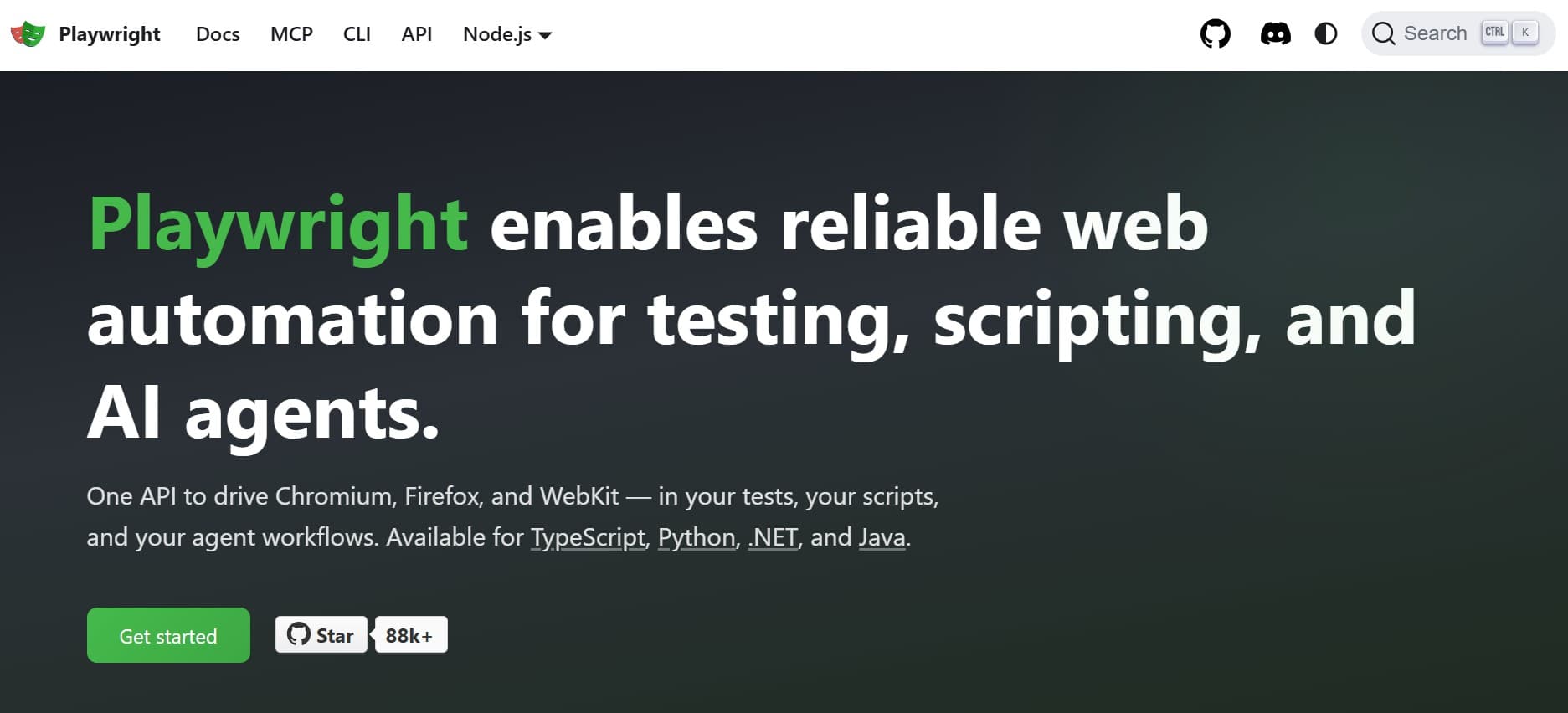
If you're starting fresh, or your Selenium suite is mostly dead weight that nobody trusts, Playwright is the better bet for most teams. We've written about this tradeoff in more detail in Playwright vs Cypress in 2026, but the short version: auto-waiting by default, built-in parallel execution without a paid cloud, multi-tab and multi-origin support, and a tracing experience that makes failure triage actually pleasant.
The migration cost is real. Budget for it. Here's a useful heuristic: if a meaningful chunk of your Selenium suite is already flaky, quarantined, or skipped in CI, you're going to rewrite most of it anyway during any serious cleanup effort. At that point, rewriting it in a framework with better primitives is the same amount of work for a better outcome.
Migration is the right path when the framework itself is actually in your way, not when you're chasing the npm download charts.
Path 3: Replace Selenium with AI-based testing
This is the path most teams haven't fully considered yet, and it changes the calculus.
For the last few years, the interesting action in testing has moved above the execution framework. Agentic testing tools can now navigate an app, understand intent, and produce tests that self-heal when a selector changes or an element moves. The framework underneath matters less than it used to, because the layer that decides what to test and maintains the tests over time is doing more of the work. What is agentic testing covers this shift in detail.
You don't have to throw away Selenium to adopt this pattern. Plenty of teams run Selenium for their existing regression suite and use an AI-based layer for new features, exploratory coverage, and the kind of tests that would have been a nightmare to script by hand. That split matters more right now than it used to, because AI coding tools are breaking most traditional test suites faster than teams can repair them. Over time, the AI-driven coverage often takes over. Not because someone mandated a migration, but because it's cheaper to maintain.
This is the right path when the problem isn't the framework, it's that you can't keep up with test authoring and maintenance in the first place.
Selenium vs Playwright vs AI: how to decide
A few questions that usually settle it.
How much of your team's time goes to test maintenance vs. new tests? If it's north of 50%, the framework isn't your main problem. Layering AI-driven authoring and self-healing on top will move the needle more than a migration will.
Are the framework's architectural limits actually hurting you? Multi-tab flows, multi-origin authentication, parallel execution without a paid cloud. If these are in your way, Playwright solves them at the framework level. If they aren't, they aren't reasons to migrate.
How wide is your language and platform matrix? If you have Java teams, .NET teams, and Python teams all writing tests against the same app, Selenium's language support is genuinely hard to replace. Playwright covers the popular ones, but the breadth isn't the same.
Who owns the grid? If the answer is "nobody, really, and we should probably look at that", moving to a tool with managed infrastructure (Playwright's cloud options, Sauce Labs, BrowserStack, or an AI-based platform that handles execution for you) will pay for itself quickly.
What others say about Selenium
Our take above is one team's view. Here is what current Selenium users say about the same friction points in public reviews:
“Setup is cumbersome compared to professional tools and maintenance takes serious time.”
G2 reviewer · G2 reviews
“Not stable for dynamic elements that appear late, disappear, reload, or change dynamically. Causes random test failures.”
G2 reviewer · G2 reviews
“Cannot run on native iOS or Android, so mobile coverage requires a separate stack.”
G2 reviewer · G2 reviews
The real cost isn't the framework
Whatever you pick, the framework is rarely the thing that determines whether your testing process works. We wrote about this in the real cost of test automation. The build is the easy part. What kills teams is the maintenance burden, the triage overhead when something fails, and the lack of a clear answer to "can we ship?"
Selenium, Playwright, Cypress, agentic tools. They all execute tests. None of them tell you which tests matter for this release, which requirements are covered, or whether the last failure you saw was a real regression or a flake. That layer lives above the framework, and most teams build it themselves out of spreadsheets and tribal knowledge until it falls over.
Frequently asked questions about Selenium in 2026
Is Selenium dead in 2026? No. Selenium still powers tests at over 55,000 companies and holds around 26% of the test automation market. It isn't the default for new projects anymore, but nothing about it is close to dead.
Should I migrate from Selenium to Playwright? Only if the framework itself is the thing slowing your team down. If you have a mature Selenium suite and an experienced team, modernization usually beats migration. Migrate when you're starting fresh or when a meaningful chunk of your existing suite is flaky or skipped in CI.
What's new in Selenium 4? WebDriver BiDi for bidirectional browser communication, relative locators that target elements by position, a rewritten Grid architecture, and Selenium Manager (added in 4.6) to handle driver versioning automatically. The upgrade from Selenium 3 closes most of the framework's worst pain points.
Is AI-based testing better than Selenium? It depends on the problem. AI-based tools win on authoring speed, self-healing, and exploratory coverage. Selenium wins on language breadth, grid control, and ecosystem depth. Most teams end up using both: Selenium for existing coverage, AI-based tools for new features.
Where qtrl fits
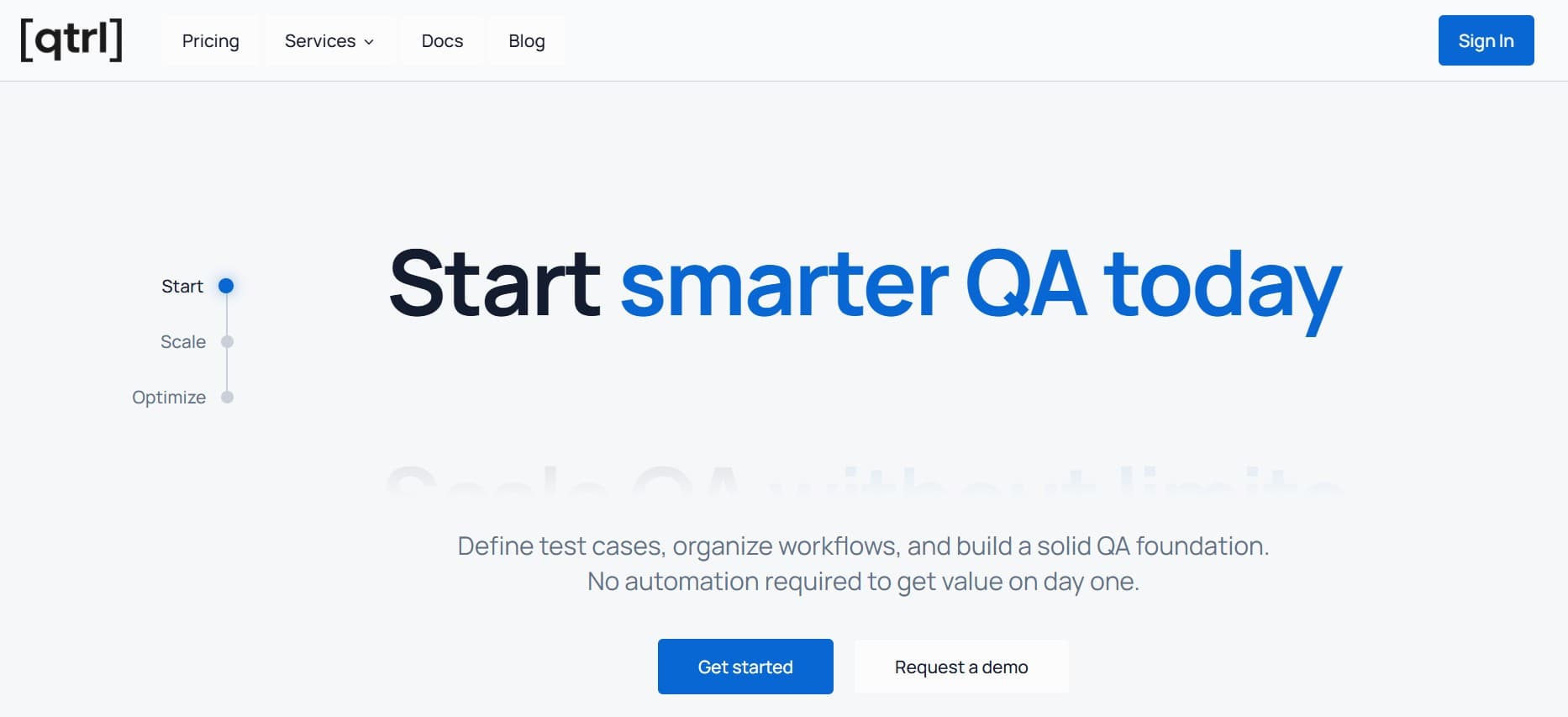
If the AI-native path is the one that fits your team, qtrl is built around it. You write tests in plain language. AI agents execute them in real browsers. Test management, reporting, and governance live in the same platform instead of being stitched together from three separate tools.
It doesn't replace your existing Selenium suite on day one. Your regression tests keep running in CI the way they do today. qtrl is where new coverage goes: the flows you'd otherwise have to script by hand, plus the exploratory paths a scripted suite was never going to catch. Most teams find the AI-driven side grows faster than the scripted side over time, and the balance shifts on its own.
Progressive autonomy means you set what the agents can do on their own and what needs human review. Nothing runs unsupervised unless your team has approved it.
Selenium isn't dead. But "keep doing what we're doing" isn't a strategy either. Pick the path that matches where your team's time is actually going, and if that path is AI-native, try qtrl.
Have more questions about AI testing and QA? Check out our FAQ