
TestRail vs Xray: which test management tool to pick in 2026
By qtrl Team · Engineering
TestRail and Xray are the two test management tools most QA leads end up comparing when their team has outgrown spreadsheets. They solve the same job (organize test cases, runs, defects, and traceability) but they sit in very different places: TestRail is a standalone web app with its own UI and database, and Xray lives inside Jira as a marketplace app. That single architectural difference drives almost every tradeoff that follows. This guide walks through what each one is, where each one wins, what the real pricing looks like, and how to pick without backing into a one-way door.
The 60-second answer
Pick Xray if your engineering team already lives in Jira and you want every test, run, and defect to share the same project keys, issue links, and permission model as the rest of your delivery work. Pick TestRail if your QA team needs a tool that doesn't depend on a Jira license per tester, runs across multiple issue trackers, or wants a dedicated test management UI that non-Jira users can use. Both are mature, both are widely adopted, and both will outlast whichever framework you're writing tests in this year.
What TestRail is
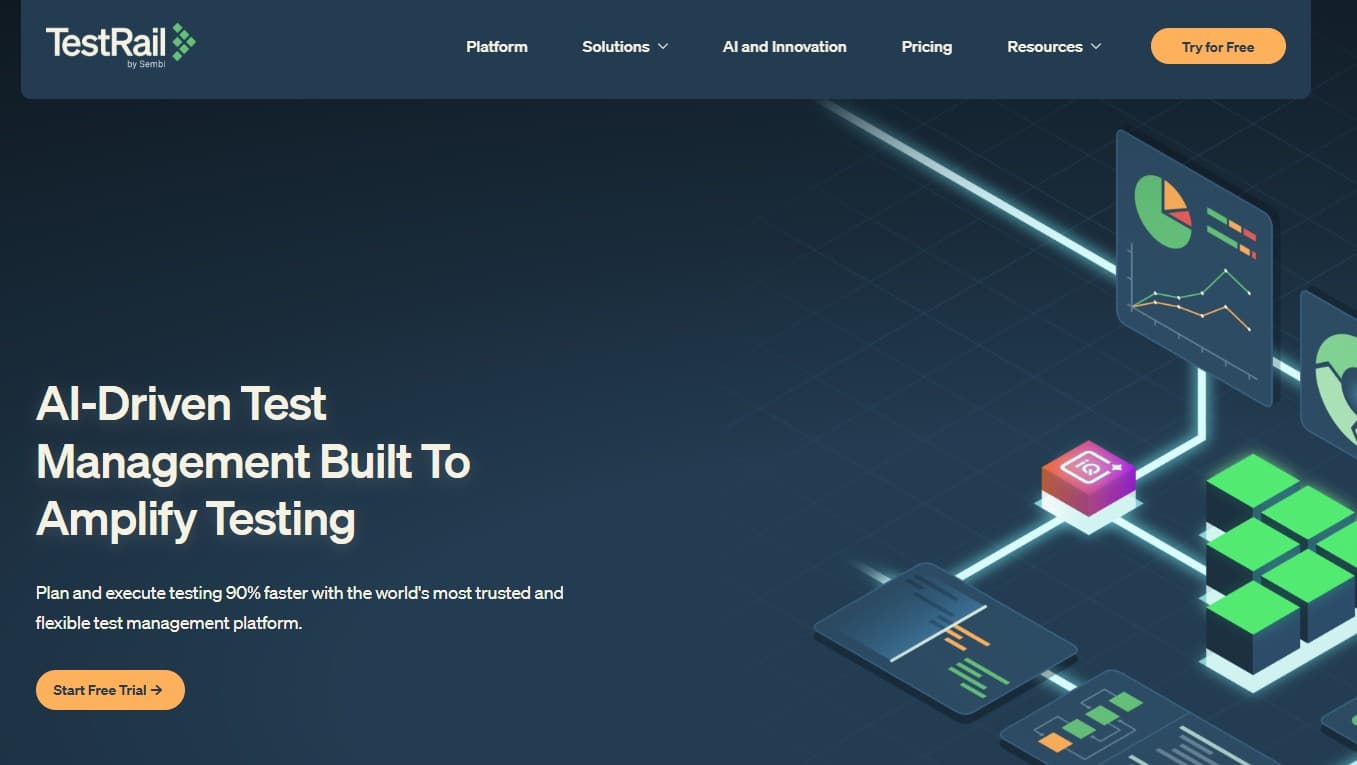
TestRail is a web-based test case management tool from Idera / Gurock. It's been around since 2010 and is one of the most widely deployed QA tools in the industry. The UI is built around test cases organized into suites and sections, test runs that snapshot those cases at a point in time, milestones that group runs by release, and a reporting layer that rolls everything up. TestRail integrates with Jira, Azure DevOps, GitHub, GitLab, and most CI systems through its REST API or vendor plugins.
It runs as a SaaS (TestRail Cloud) or self-hosted (TestRail Server / Enterprise). The self-hosted option is one of the reasons regulated industries default to it: you own the database, you own the backups, and the audit story is straightforward.
What Xray is
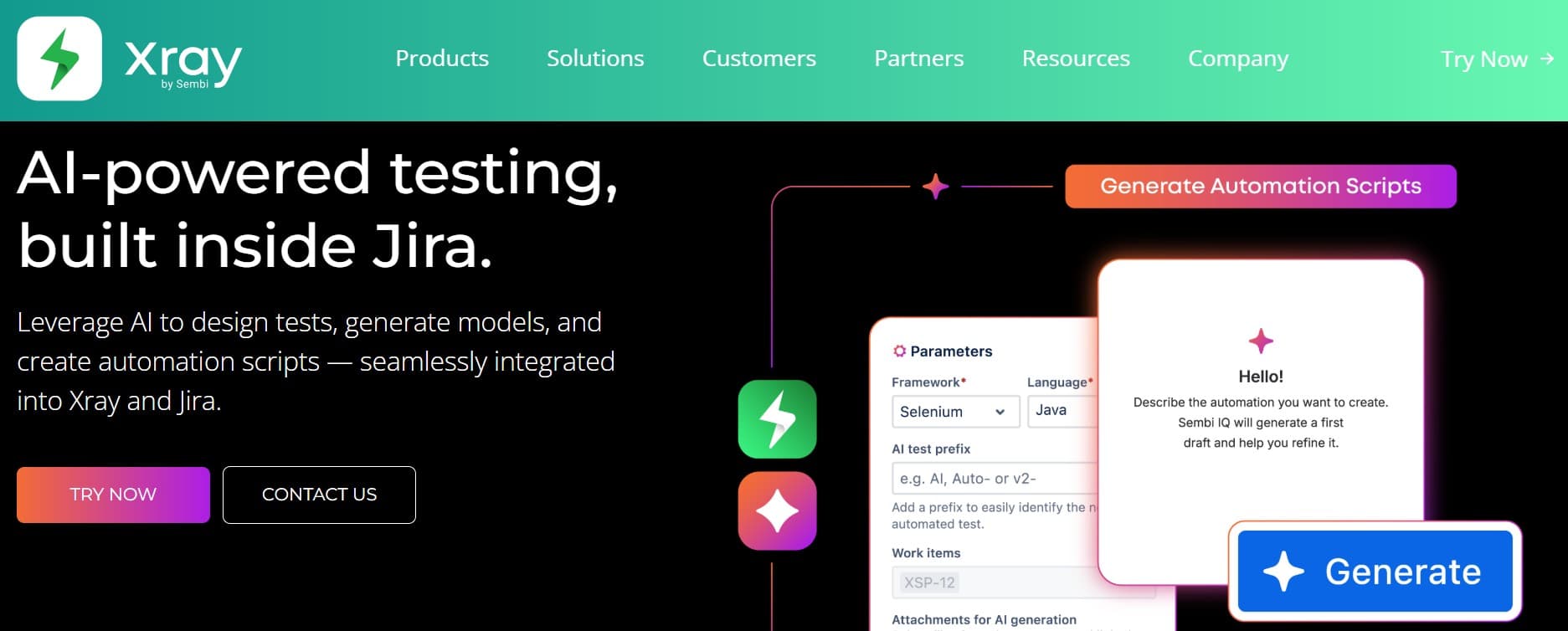
Xray is a Jira-native test management app from Xpand IT. It runs inside Jira (Cloud, Data Center, or Server) and models every artifact (test, test set, test plan, test execution, defect) as a Jira issue type. That sounds like a small implementation detail and it is actually the entire product philosophy. Because Xray uses native Jira issues, you get Jira's permissions, workflows, JQL search, notifications, and reporting on top of test data for free.
Xray supports manual test cases, Cucumber/Gherkin BDD scenarios, and automated test results imported from CI through a well-documented REST API. It's the most popular test management app on the Atlassian Marketplace by install count.
Side-by-side comparison
| Capability | TestRail | Xray |
|---|---|---|
| Deployment model | Standalone web app (Cloud or self-hosted) | Jira app (Cloud, Data Center, Server) |
| Required dependency | None | Jira license for every user |
| Test case model | Suites, sections, custom fields | Jira issue types (Test, Test Set, Test Plan, Test Execution) |
| Reusable test runs | ✓ first-class, with snapshotting | ✓ via Test Executions and Test Plans |
| BDD / Cucumber | ! via plugins and custom templates | ✓ native Gherkin support |
| Automation integrations | REST API, Jenkins/CircleCI plugins | REST API, native CI plugins, Cucumber importer |
| Reporting | Built-in dashboards, milestone reports | Jira gadgets, JQL queries, Xray-specific gadgets |
| Cross-project traceability | ! external links | ✓ native (everything is a Jira issue) |
| Non-Jira issue trackers | ✓ supports Azure DevOps, GitHub, GitLab | ✗ Jira only |
| Permissions model | TestRail roles (Admin, Lead, Tester, Read-only) | Jira project roles and permissions |
| Self-hosted option | ✓ TestRail Server / Enterprise | ✓ Xray on Jira Data Center |
| Pricing model | Per-user per month, separate from Jira | Tiered per Jira user count |
| Maturity | ~15 years | ~13 years |
Where TestRail wins
QA teams that don't all need Jira. If only your engineers live in Jira and your QA team has manual testers, contractors, outsourced testers, or business-side UAT users, paying for a Jira license plus an Xray license for each of those people is expensive and operationally awkward. TestRail charges only for the people who actually use the test management tool.
Multi-tracker environments. If part of your org uses Jira, another part uses Azure DevOps, and a third uses GitHub Issues, TestRail integrates with all of them. Xray is married to Jira.
Dedicated QA UX. TestRail's UI is purpose-built for running test suites: bulk status updates, keyboard shortcuts for marking steps, test plan composition. Xray inherits the Jira issue UI for every action, which can feel heavy when you're trying to rip through 200 manual cases.
Compliance reporting. The audit story is simpler when the test management tool owns its own database and audit log. Regulated teams in pharma, medical devices, finance, and aerospace tend to favor TestRail for that reason.
Where Xray wins
One source of truth in Jira. Every test, every defect, every requirement, every release is a Jira issue. Traceability from requirement to test to defect is a single JQL query. No syncing, no webhook glue, no broken external links.
BDD-first teams. Xray has the cleanest native Gherkin and Cucumber support of any major test management tool. You can write scenarios in Jira, run them in CI, and have the results land on the original test.
Engineering-led QA. When the developers are the testers, a tool that lives in their existing Jira board removes a context switch and a permission boundary. Adoption is dramatically easier.
Atlassian-standardized orgs. If your company has already decided that Jira is the system of record for everything, Xray fits that decision without exception.
Pricing reality in 2026
Both vendors publish list pricing that gets discounted at scale, so the numbers below are the starting points you'll see on the website rather than what a 200-seat deal lands at. Verify on each vendor's pricing page before signing anything.
TestRail Cloud Professional starts around $37 per user per month, with Enterprise tiers (more compliance, SSO, advanced reports) priced on request. Self-hosted Server licenses are sold annually on a per-user basis.
Xray uses Atlassian Marketplace tiered pricing based on the total number of users in your Jira instance. At the small end (10 users) it's a few dollars per user per month. Tiers step up at 25, 50, 100, 250, 500, and beyond. Data Center pricing is annual, sold in the same tiers.
The honest comparison: at small team sizes (under 25 testers) Xray is typically cheaper because you're already paying for Jira. At larger sizes, especially when a chunk of your test users wouldn't otherwise need Jira, TestRail often comes out ahead because you're not double- licensing those seats.
Integrations and ecosystem
TestRail integrations. First-class Jira integration via the TestRail for Jira app (two-way sync of issues and defects). Native integrations or plugins for Azure DevOps, GitHub, GitLab, Bitbucket, Slack, Microsoft Teams. CI integrations for Jenkins, CircleCI, GitHub Actions, Azure Pipelines, GitLab CI. Open REST API used by hundreds of community libraries.
Xray integrations. Native everything-is-Jira integration. REST API for importing automated test results from any framework (JUnit, TestNG, Cucumber, Robot, NUnit, xUnit, and generic JSON). Native CI plugins for Jenkins, Bamboo, Azure DevOps, GitHub Actions, GitLab CI, Bitbucket Pipelines. Test4J / Xray for Junit5 helper libraries.
Migration considerations
Migrating from one to the other is a real project, not a weekend export. TestRail to Xray means mapping suites to projects, sections to test repositories, custom fields to Jira fields, and rewriting any automation glue that pushes results to TestRail. Xray to TestRail is the same in reverse: extracting Jira issues, flattening them into TestRail's suite/section model, and rebuilding dashboards.
If you're mid-migration and looking for a third option, see our TestRail alternatives roundup. If you're evaluating from scratch, the broader test case management tools guide covers the wider market.
Where AI changes the picture
Both vendors have shipped AI features in 2025 and 2026. TestRail's AI focuses on test case generation from requirements and natural-language search. Xray has added AI-assisted test generation and result analysis inside Jira. Both are useful, both are still maturing, and neither replaces the underlying architectural decision of where your test management lives.
The bigger 2026 shift is execution. Scripted frameworks (Playwright, Cypress, Selenium) handle the regression that doesn't change much. Agentic tools handle the flows that change every sprint. Test management (TestRail or Xray) holds the cases, the runs, and the audit trail across both. We covered this stack in why test management isn't dead and what agentic testing actually means.
qtrl plugs into either: results land on the test cases you already have in TestRail or Xray, so the AI execution layer doesn't replace your test management decision.
Decision checklist
Pick TestRail when:
- You have testers who don't otherwise need Jira.
- You work across multiple issue trackers (Jira, Azure DevOps, GitHub).
- You need a dedicated QA UI optimized for fast manual test execution.
- Self-hosted, audit-ready storage matters more than ecosystem integration.
- Your QA team is large relative to your engineering team.
Pick Xray when:
- Every QA participant already has a Jira license.
- You've standardized on Atlassian as the system of record.
- BDD / Gherkin is core to how you write tests.
- Cross-project traceability via JQL matters more than a dedicated QA UI.
- Your team is engineering-led and lives in Jira already.
Frequently asked questions
Can TestRail and Xray be used together? Technically yes, but it's rare and not recommended. You'd duplicate the test management responsibility and have to keep both in sync. Pick one.
Is Xray free? No. Xray on Jira Cloud has a free tier for very small teams (10 users) but production teams pay tiered pricing. There is no free version of TestRail beyond the 30-day trial.
Which one has better Jira integration? Xray, by a wide margin, because it is Jira. TestRail's Jira integration is good for a connected tool but it's still a sync, not a shared database.
Does either one do test automation? Neither one writes or runs automated tests. Both ingest results from CI through APIs. The execution happens in your test framework, the management happens in TestRail or Xray. If you want a tool that also drives the browser, that's the agentic-execution end of the market, covered in best agentic testing tools.
Which is better for regulated industries? TestRail historically wins this comparison because of self-hosted Enterprise, clearer audit logs, and 21 CFR Part 11 / GxP precedents. Xray Data Center can meet the same bar with more configuration work.
What about Zephyr? Zephyr is the third major option in this category. We covered it separately in TestRail vs Zephyr.
What others say about TestRail
A few recurring complaints in public reviews give a flavor of where TestRail tends to frustrate teams at scale:
“TestRail starts to feel slow and clunky once suites grow large or you run lots of configurations and concurrent users, and the UI still feels old-school compared to newer tools.”
G2 reviewer, Program Manager (Small-Business) · G2 reviews
“Support has been hard to reach for quick resolutions, billing and product logins are separate, and managing multiple projects is more painful than it should be.”
G2 reviewer, Computer Software (Small-Business) · G2 reviews
“It slows down with lots of test cases, runs, or users, and collaboration feels static next to modern tools because comments lack real-time team interaction.”
G2 reviewer, IT Manager (Mid-Market) · G2 reviews
What others say about Xray
Xray draws similar critiques, mostly around the learning curve of its Jira-native model and performance on large projects:
“Xray is overrated and hard to work with. It is slow, lags on large test sets, and the UX is unclear.”
G2 reviewer, QA Team Lead (Mid-Market) · G2 reviews
“Xray does not prevent duplicate issues, lacks Slack integration, cannot report issues from email, and has no external dashboard.”
G2 reviewer, Junior Software Tester (Mid-Market) · G2 reviews
“The core concepts are complex for new users, the UI gets slow on large Jira projects, and bulk updates on big data sets are cumbersome.”
G2 reviewer, Lead SDET (Mid-Market) · G2 reviews
The thing that matters more than the choice
Test management tools rarely fail because of the tool. They fail because nobody owns the test cases, the runs stop getting reviewed, the traceability is theatrical, or the integration with CI was never finished. TestRail and Xray are both capable enough to run a serious QA operation. Pick the one that fits your Jira reality, write down who owns which tests, and spend the energy on the discipline, not the next feature comparison.
Whichever tool you pick for test management, you'll still want an execution layer for the flows that change every sprint. qtrl runs that agentic layer next to your test management of choice. Try it and see how it lands next to TestRail or Xray.
Have more questions about AI testing and QA? Check out our FAQ